


What is Cleanroom Lighting

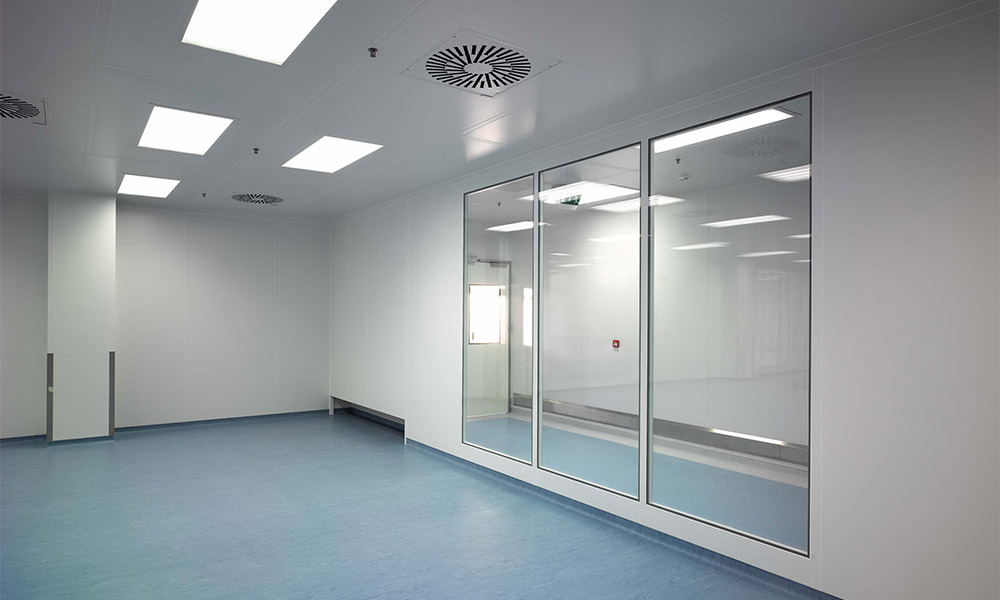
1. Definition of Cleanroom Lighting
Cleanroom lighting, also known as purification lights or dust-free clean lighting, are specialized functional lighting products custom-developed for clean rooms (dust-free workshops). They are compatible with cleanroom standards such as ISO 14644, pharmaceutical GMP, food production, and medical devices.
Unlike ordinary lighting that only provides illumination, the core design principle of clean lights is that the fixtures themselves do not generate dust, do not accumulate dust, do not breed microorganisms, can withstand periodic chemical sterilization, and do not disturb the laminar airflow in cleanrooms, thus preventing the fixtures from becoming a source of contamination in the workshop.
2. Core Principles of Design and Development
Cleanroom environments require continuous control of airborne particles and microorganisms. The workshop routinely uses alcohol, hydrogen peroxide, peracetic acid, ozone, and VHP vapor sterilization for disinfection. Ordinary light fixtures accumulate dust in gaps, experience paint peeling, and gather dust inside. Disassembly and maintenance can release dust and contaminate products.
Cleanroom lights are optimized in terms of materials, structure, optics, sealing, and installation and maintenance from all dimensions, making them suitable for controlled clean environments.
3. Detailed Explanation of the Five Core Structures (Material and Exterior Structure)
3.1 Housing Material
3.1.1 Main Housing: For high-cleanliness areas, use 304/316 stainless steel; for general clean areas, use thickened anodized aluminum alloy, with brushed/polished surface treatment. The surface is dense and smooth, corrosion-resistant; long-term wiping with disinfectant will not cause rust, paint peeling, or powder shedding. Avoid ordinary iron sheets and recycled plastics.
3.1.2 Sealing Components: One-piece food-grade silicone/EPDM sealing ring around the entire circumference, fully pressed and sealed, overall protection level ≥ IP65, preventing water vapor and dust from penetrating into the internal cavity of the lamp.
3.1.3 Light-Transmitting Panel: Anti-static optical PC panel/high-transmittance acrylic, with added anti-static and anti-corrosion additives, resistant to electrostatic dust accumulation and chemical solvent corrosion, will not crack or release harmful substances due to frequent disinfection.
3.1.4 Internal Components: LED driver power supply fully encapsulated with epoxy resin, internal wiring uses corrosion-resistant silicone rubber cables, no exposed circuit boards, no loose components generating debris or dust.
3.2 Exterior Structure Design (Seamless Structure)
3.2.1 Contour: The entire machine adopts a flat design, with all corners fully transitioned with R arcs (R≥3mm); no sharp right angles, no concave-convex grooves, no external heat-dissipation fins, no protruding clips, ensuring no dust accumulation.
3.2.2 Assembly Process: Aluminum profiles are integrally extruded, and stainless steel is integrally bent and formed. Exposed surfaces of the whole machine should have minimal seams; if there are joint locations, interior sealing with adhesive should be applied, making the seams invisible on the exterior surface.
3.2.3 Fasteners: All fixing screws are countersunk and equipped with dustproof sealing caps, ensuring that no screw heads are visible on clean, viewable surfaces.
3.2.4 Light-Emitting Surface: A single-piece flat diffusion panel without metal grilles, perforations, or segmented slots; the back of the lighting fixture is sealed, with no heat-dissipation openings, preventing dust from the ceiling cavity from entering the fixture.
4. Optical System Features
4.1 High Color Rendering: For pharmaceutical and operating rooms Ra≥90, for electronics and food cleanrooms Ra≥80; accurately distinguishes product color differences and defects, meeting quality inspection requirements.
4.2 Low Glare: Built-in diffused optical structure, UGR≤19, no direct exposure of bare LEDs, work surface illuminance uniformity ≥0.7.
4.3 Low Heat Output: Uses high-efficiency, low-heat LEDs to reduce turbulence caused by heat convection, avoiding disturbance of cleanroom laminar flow and preventing suspended dust from being lifted.
4.4 Low UV Control: Filters harmful shortwave ultraviolet rays, preventing deterioration of photoresist, pharmaceuticals, cosmetics, and photosensitive materials.
4.5 Stable Light Decay: Long life of 50,000 hours, low light decay, reducing the frequency of lamp replacements and lowering the risk of contaminating clean zones during lamp changes.
5. Antibacterial and Sterilization-Resistant Properties
5.1 Physical Antibacterial: The shell is smooth and seamless, with no hidden grooves for dirt to accumulate; dust, water stains, and bacteria cannot hide, and the entire surface can be cleaned with a single wipe of a dust-free cloth. The stainless steel substrate itself is not prone to biofilm adhesion. The plastic version contains food-grade silver ion antibacterial masterbatch to inhibit the attachment and proliferation of surface bacteria.
5.2 Sterilization Resistance: Can withstand long-term wiping with 75% alcohol, hydrogen peroxide spraying, ozone fumigation, and VHP high-temperature vapor sterilization. The material does not dissolve to release organic substances and does not mold or blister.
5.3 Sterile Cavity: The fully enclosed inner cavity is dry and free of water vapor, preventing the environment necessary for mold or bacterial growth.
6. Installation Methods
6.1 Recessed (Mainstream): The lamp is embedded into the clean color steel ceiling, with the lamp surface flush with the ceiling panel and no protrusion. The lamp frame and ceiling gaps are fully sealed with neutral sealant to prevent dust from the ceiling cavity from falling into the clean area; commonly used in Class 10,000, 1,000, and 100 high-cleanliness workshops.
6.2 Sealed Ceiling Mounted: The base is equipped with a full-circle sealing rubber pad, tightly attached to the ceiling for sealed installation, with fixing screws hidden on the back of the lamp; commonly used in clean buffer rooms, changing rooms, and clean corridors.
6.3 Cable Entry Sealing: The power cable entry is fitted with a rubber gland seal, fully blocking the cable hole to prevent dust from entering indoors through the cable gaps.
Installation positions should avoid FFU high-efficiency air outlets and laminar flow ducts to prevent lamps from obstructing airflow and causing vortex dust accumulation.
7. Maintenance Method (Cleanroom Dedicated Design)
Using a back-opening maintenance structure: the maintenance entry of the lamp is located above the ceiling (non-clean side). Maintenance personnel replace the power supply and light source by removing the back cover in the ceiling cavity. There is no need to disassemble the front of the lamp inside the clean production area, preventing dust accumulation from falling inside the clean space and meeting GMP cleanroom audit requirements.
Conventional lamps are disassembled from the front panel inside the room, causing internal dust to fall directly and contaminate the environment.
8. Common Categories and Applications
8.1 Product Categories
8.1.1 Embedded Cleanroom Panel Light (600×600/1200×300): Main model for cleanrooms;
8.1.2 Ceiling-mounted Clean Light: Auxiliary cleanrooms where ceiling embedding is inconvenient;
8.1.3 Explosion-proof Clean Light: Chemical and flammable/explosive cleanrooms;
8.1.4 Emergency Clean Light: Fire emergency lighting for operating rooms and sterile workshops.
8.2 Applicable Scenarios
① Pharmaceutical Industry: GMP sterile API workshops, injectable filling workshops, sterile testing laboratories;
② Electronics Industry: semiconductor wafer workshops, SMT patch dust-free rooms, optical lens assembly workshops;
③ Food and Daily Chemicals: sterile beverage filling, sterile cosmetics production, clean areas for baking packaging;
④ Medical Facilities: operating rooms, transplant wards, sterile consumables production workshops;
⑤ Laboratories: biosafety laboratories, clean physical and chemical testing laboratories.
9. Summary
Clean lamps are specialized lamps that combine lighting functions with dust-free and dirt-resistant properties, as well as sterilization and antibacterial resistance. From material selection to structure, they are all designed around preventing contamination in a clean environment and are indispensable supporting equipment for cleanrooms.