
Ultimate guide to choose decorative lighting fixtures for public areas

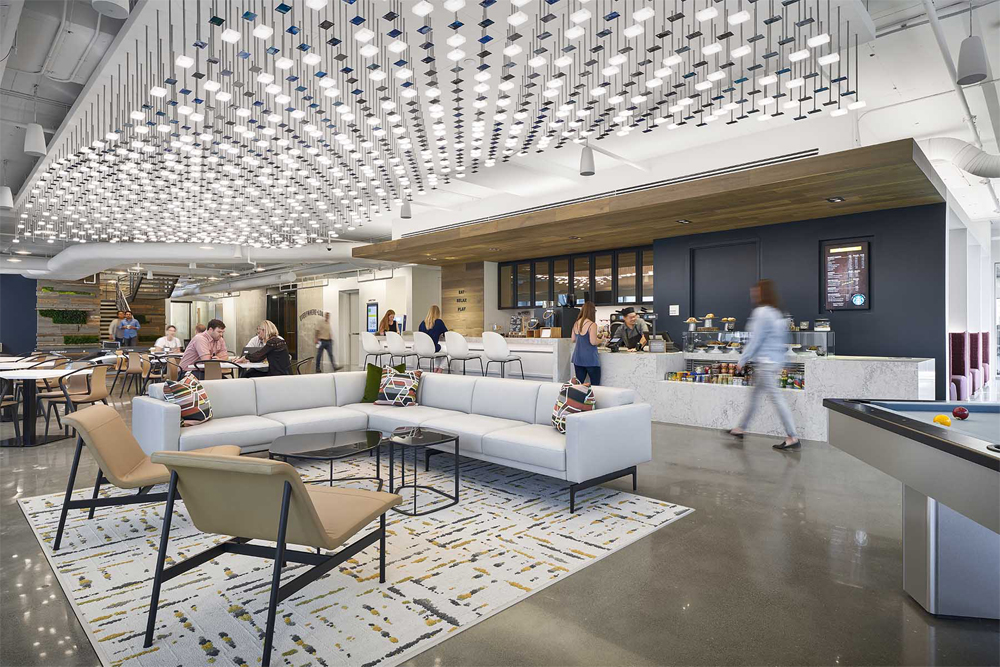
Choosing the style of decorative lighting fixtures for public areas is a process that deeply integrates “aesthetic expression” with “business logic.” It’s not just about whether it looks good, but also about brand communication, spatial experience, and operational efficiency.
Here is a systematic strategy and step-by-step approach for making the selection:
- Core Decision Logic: Starting from the ‘Spatial Character’
The choice of decorative lighting in public areas should follow a clear decision-making chain: functional positioning → style determination → specific selection.

Let’s start by establishing your style, as this is the cornerstone of choosing a design.
Style Positioning and Style Mapping
1.1 Modern Minimalist / Tech-Inspired Space
• Style Features: Geometric shapes (spheres, cubes, cones), smooth lines, linear lighting, floating design elements.
• Common Styles: Large artistic chandeliers (composed of multiple simple geometric shapes), concealed LED strips, recessed magnetic track lighting systems, fiber optic lights, luminous ceilings.
• Materials: Aluminum, acrylic, glass, white-coated metal.
• Applicable Scenarios: Corporate lobbies, tech company showrooms, modern-style hotels, boutique stores.
1.2 Artistic Decoration / Creative Space
• Style Characteristics: It is an artwork in itself, emphasizing visual impact, conversational value, and uniqueness.
• Common Styles: Customized sculptural chandeliers, dynamic light and shadow installations, immersive interactive light art.
• Materials: No limitations, often combining various unconventional materials.
• Suitable Scenes: Museum atriums, high-end shopping mall centers, brand flagship stores, trendy restaurants
1.3 Industrial Vintage / Personalized Spaces
• Style Features: Showcases structural aesthetics, with a sense of history and mechanical feel.
• Common Styles: Edison bulb clusters, chandeliers with exposed pipes and gears, track lighting systems, wire mesh shades, vintage wall lamps.
• Materials: Distressed iron, black steel, brass, tungsten filament glass bulbs.
• Applicable Spaces: Cafés, bookstores, creative office areas, renovated loft hotels.
1.4 Natural & Humanistic / Healing Spaces
• Style Characteristics: Inspired by nature, featuring organic shapes, with soft and warm lighting.
• Common Styles: Biomimetic lamps (such as leaves, clouds), paper lampshades, woven pendant lights (rattan, hemp, bamboo), clay lamps, stone lamps.
• Materials: Wood, Xuan paper, rattan, linen, clay.
• Suitable Settings: Resort hotels, wellness centers, Japanese restaurants, artsy bookstores, maternal and child centers.
1.5 Luxurious Classic / Noble Spaces
• Style Features: Emphasizes exquisite details, symmetrical structures, and precious materials, showcasing grandeur.
• Common Styles: Multi-tier crystal chandeliers, metal filigree carved chandeliers, silk lampshade wall sconces, candelabra chandeliers.
• Materials: Swarovski crystals, polished brass/stainless steel, marble, velvet.
• Suitable Scenes: Five-star hotel lobbies, high-end clubs, luxury brand stores, classical-style banquet halls.
2. The Three Golden Rules for Style Selection
Rule 1: Scale and Proportion — “Size Matters”
This is the step where mistakes are most easily made. No matter how beautiful a lamp is, if the size is wrong, the effect is completely ruined.
• Large atrium/high-ceiling space: Lighting should have sufficient “volume” and “drooping effect” to fill the space. You can choose large combined chandeliers or a cluster of medium-sized chandeliers arranged in a sequence.
• Low-ceiling spaces/corridors: Prefer flat, flush-mounted, or uplighting designs (such as ceiling lights or wall-washing light strips), and avoid using chandeliers with a strong downward presence that could feel oppressive.
• Hanging height reference: The bottom of a chandelier should be at least 2.2 meters above the floor to ensure safe passage. For dining table chandeliers, a height of 70–90 cm above the table is appropriate.
• Simple diameter/length calculation: (Room length or width) ÷ 12 ≈ suitable diameter of the chandelier (meters). For linear chandeliers, the length should not exceed 2/3 of the table length.
Rule 2: Material and Light Quality — ‘Texture Must Be Right’
Material determines how light is reflected and affects the atmosphere directly.
• ransparent materials (glass, crystal): Light is brilliant and dazzling, creating a luxurious and dynamic lighting effect.
• Diffuse materials (acrylic, paper, fabric): Light is soft and even, effectively preventing glare and creating a warm and peaceful atmosphere.
• Metal materials (brass, black iron): Light is directed or partially reflected, creating a modern, sleek, or vintage texture. Pay attention to surface treatment (glossy surfaces reflect light spots easily, while matte surfaces are gentler).
• Natural materials (rattan, wood, stone): Light is warm and mottled, casting unique textured shadows that enhance the natural feel and friendliness of a space.
Rule 3: Maintenance and Sustainability — ‘Costs Must Make Sense’
Lighting fixtures in public areas are long-term assets and their operating costs must be considered.
• Ease of Cleaning: Avoid choosing designs that are extremely complex, prone to dust accumulation, and difficult to wipe (such as styles with numerous crystal beads or dense hollow carvings). Opt for designs with smooth surfaces or modular construction.
• Light Source Replacement: Check whether the fixture allows for easy replacement of the light source or module. Avoid one-piece, non-serviceable fixtures, as a malfunction would require replacing the entire unit.
• Durability: In areas with high foot traffic, the fixture materials should be sturdy and durable. Avoid using materials that are easily broken, deformed, or prone to fading.
3. Style Strategies for Different Public Areas
| Area | Core Objective | Decorative Lighting Style Strategy | Pitfalls to Avoid |
| Hotel/clubhouse lobby | Make a strong first impression and showcase brand value | Centralized art installation: large custom chandeliers or sculptural lamps are preferred. The style must match the hotel’s positioning (luxury/design/resort) 100%. | The style does not match the brand’s tone; the size is too small; the lighting is too cold and lacks warmth. |
| Restaurant/Bar | Create an atmosphere to enhance appetite and immersion | Desktop Focus Environment Rendering: Use stylish pendant or wall lamps above each table as the visual focal point. Combine booth LED strips and wall washing lights to create layers. | Lighting that is too bright or too dim; poor color rendering causing food to lose its appearance; glare directly hitting customers’ eyes. |
| Shopping mall/Retail store | Guide customer flow, highlight products, stimulate consumption | Flexible track lighting Key decoration: Use adjustable track spotlights to meet flexible product lighting needs. Install decorative lighting fixtures at the entrance, atrium, and lounge area to enhance the ambiance. | The decorative lights are too bright and interfere with the product display; the style of the lighting fixtures clashes with the style of the products. |
| Office Building/Meeting Room | Reflect the company’s image and inspire creativity and efficiency | Combining a sense of sequence with intelligence: Use a set of design-oriented linear pendant lights or geometric combination lights in the reception area. In the conference room, use dimmable and color-adjustable recessed decorative lights to suit different scenarios. | Too flashy and distracting; there is screen glare or shadows on the face. |
| Corridor/Transition Area | Safe guidance, creating a sense of rhythm and fun | Continuity design: Use a series of small wall lights, recessed linear light strips, or evenly distributed subtle ceiling lights to create a rhythm of light. | Insufficient lighting poses a safety hazard; irregular spacing of lamps creates a sense of disorder. |
4. Final Checklist
Before making a decision, please answer the following questions:
• Is the style consistent? Do the lighting fixtures complement the overall design style of the space and the brand VI colors?
• Are the dimensions appropriate? Have you verified the size and hanging height of the lighting fixtures using renderings or on-site mock-ups?
• Is the lighting comfortable? Will it cause unpleasant direct glare or reflected glare (especially on desktops, screens, or glossy surfaces)?
• Are the functions adequate? After turning on decorative lights, does the basic illumination still meet the functional requirements of the area?
• Is it easy to maintain? Are the cleaning and bulb replacement efforts and frequency acceptable?
• Is it timeless? Is the style prone to go out of fashion? Can it withstand at least 5–10 years of aesthetic scrutiny?
Final advice: For important public space projects, investing in professional lighting design is highly valuable. Designers can perfectly integrate artistic creativity, technical specifications, and business needs, present the final effect through software simulations, avoid trial-and-error costs, and make every decorative light a highlight that enhances the space’s value.